


Our Vision
To become the excellent department in generation and dissemination of knowledge, skills and attitudes so as to develop and utilize indigenous resources effectively and efficiently by recognizing the needs and values of cultures.
Welcome to Univet University. It was founded in 1966, and Univet University has grown into one of the leading institutions of higher education.
Advancing indigenous medicinal knowledge through scientific research, pharmaceutical innovation, conservation of medicinal resources and quality higher education.
The Department of Indigenous Medical Resources is committed to the generation, advancement and dissemination of knowledge, skills and attitudes necessary for the effective, efficient and sustainable development, use and processing of indigenous medicinal resources.
The Department integrates traditional knowledge and practices with modern science and technology to promote innovation while preserving and advancing the rich heritage of indigenous medicine.
The Department offers two undergraduate degree programmes designed to address evolving national and global needs in indigenous medicinal resources and indigenous pharmaceutical technology. These programmes equip graduates with scientific knowledge, technical competencies, professional skills and innovative thinking.
Guided by cultural values, academic excellence, innovation and the responsible use of indigenous resources.
To become the excellent department in generation and dissemination of knowledge, skills and attitudes so as to develop and utilize indigenous resources effectively and efficiently by recognizing the needs and values of cultures.
To maintain highest standards in education and innovation to develop indigenous medical resources by producing competent professionals while appreciating the social, cultural and economic values.
Welcome to the Department of Indigenous Medical Resources (IMR), a dynamic academic and research hub within the Faculty of Indigenous Health Sciences and Technology at the Gampaha Wickramarachchi University of Indigenous Medicine. Our department stands at the forefront of a transformative mission: to harmoniously blend traditional knowledge with modern science and technology for the sustainable development of medicinal resources and indigenous pharmaceutical innovations.
Sri Lanka possesses a rich heritage of indigenous medical knowledge, deeply rooted in cultural practices and biodiversity. At IMR, we recognize the immense value of this heritage and strive to scientifically validate, preserve, and advance it to meet contemporary healthcare and industrial demands. Our vision is not only to safeguard traditional wisdom but also to elevate it through cutting-edge research, innovation, and technological integration.
The department offers two flagship undergraduate programmes: the Bachelor of Science Honours in Indigenous Medicinal Resources and the Bachelor of Health Science Honours in Indigenous Pharmaceutical Technology. These programmes are carefully designed to produce highly competent graduates equipped with multidisciplinary knowledge, practical skills, and entrepreneurial capabilities. Our graduates are prepared to contribute meaningfully to national development, global health, and sustainable resource utilization.
A key strength of the department is its state-of-the-art facilities, including advanced laboratories in chemistry and biology, an instrumentation laboratory, a dedicated pharmaceutical workshop, a plant tissue culture research centre, and a well-established herbarium. These resources provide students with hands-on experience and exposure to modern analytical techniques while maintaining a strong foundation in traditional practices. Through this integrated approach, students gain the ability to develop safe, effective, and high-quality herbal and natural pharmaceutical products.
Innovation and entrepreneurship are central to our academic philosophy. The department actively promotes herbal product development, enabling students to translate theoretical knowledge into practical applications. From herbal teas and ointments to cosmeceuticals and nutraceuticals, our students engage in the full spectrum of product design, formulation, and commercialization. These initiatives not only enhance learning but also contribute to the growing global demand for natural and sustainable healthcare solutions.
Our commitment extends beyond the classroom. Through industry collaborations, research partnerships, community engagement, and international exposure programmes, we ensure that our students are well-prepared for real-world challenges. As we look toward the future, the Department of Indigenous Medical Resources remains dedicated to fostering a new generation of scientists, innovators, and entrepreneurs who can bridge the gap between tradition and modernity.
We invite you to explore our programmes, engage with our research, and join us in shaping a sustainable and innovative future for indigenous medical resources.
Explore undergraduate study pathways related to indigenous pharmaceutical technology and medicinal resources.
BHSc Hons in IPT
This is a four-year honours degree where students qualified with a noted Z-score in the Technology and Science streams of the G.C.E. A/L examination are eligible to apply. The BHSc Hons in IPT is presented to provide effective and efficient services to the indigenous pharmaceutical industry by integrating and applying science-based technology for the advancement of indigenous pharmaceutical products to meet growing healthcare needs.
G.C.E. A/L examination candidates who have qualified for university admission in Engineering Technology, Biosystems Technology, Biology or Agriculture streams.
The syllabus and curriculum are structured on a course system that runs in academic semesters. The duration of a semester is 15 weeks. A course is a subject module bearing a credit value. A credit is a time-based quantitative measure, excluding independent learning hours, used in calculating the grade point average.
The course modules are organized into four academic years: Year 1, Year 2, Year 3 and Year 4.
Year 1 of the BHSc Hons in IPT study programme starts after the completion of the orientation programme and spans two semesters (30 weeks of academic activities). Year 1 begins with a study of Fundamentals of Indigenous Medicine, in which the philosophical background of Indigenous Medicine is introduced. Fundamental theoretical knowledge and practical experience in Basic Sciences, Fundamentals of Indigenous Pharmacy and Management are provided. Supplementary courses enhance language and professional skills.
Year 2 focuses on the basic principles of Indigenous Pharmaceutical Processing and related advanced sciences. Supplementary courses in language, Information and Communication Technology, and management enhance graduate competencies and values.
Year 3 concentrates on generating knowledge and skills in Indigenous Pharmaceutical Preparation and emerging technologies in indigenous pharmaceuticals. During Year 4, students gain hands-on experience in the standardization of indigenous pharmaceuticals and opportunities to address issues encountered in the indigenous pharmaceutical industry.
A Bachelor of Health Science Honours in Indigenous Pharmaceutical Technology graduate of the Gampaha Wickramarachchi University of Indigenous Medicine will have comprehensive knowledge of the concepts, theories and ethics underlying the principles, practices and techniques of indigenous pharmacology. Graduates will be able to select and prepare raw materials and produce indigenous pharmaceuticals using appropriate technologies while adhering to relevant ethical practices.
They will acquire the knowledge and skills to promote the use of indigenous and natural pharmaceuticals in public health management. Graduates will also develop IT competencies and entrepreneurial capabilities in pharmaceutical development, manufacturing and marketing. Potential roles include pharmaceutical manufacturer, pharmacist with management and marketing skills, and pharmaceutical developer, subject to applicable qualifications and professional requirements.
Refer to the official curriculum and student handbook for detailed information about the programme.
Add the approved handbook PDF link here when available.
BSc Hons in IMR
This is a four-year honours degree for which students with a qualifying Z-score in the Biological Science and Agricultural Science streams of the G.C.E. A/L examination are eligible to apply. Catering to the growing market in natural curatives, remedies and medicines, along with the increasing global understanding of the positive health effects of natural foods, this programme is designed to equip students with knowledge and skills related to natural food production technology, natural medicinal herb technology, and organic agrarian livestock development and management. These areas can help graduates pursue emerging employment opportunities.
G.C.E. A/L examination candidates who have qualified for university admission in the Biology or Agricultural Science streams.
The syllabus and curriculum are structured on a course system that runs in academic semesters. The duration of a semester is 15 weeks. A course is a subject module bearing a credit value. A credit is a time-based quantitative measure, excluding independent learning hours, used in calculating the grade point average.
The course modules are organized into four academic years: Year 1, Year 2, Year 3 and Year 4.
Year 1 of the BSc Hons in IMR study programme spans two semesters (30 weeks of academic activities). It begins with Fundamentals of Indigenous Medicine, which introduces the philosophical background of Indigenous Medicine. Fundamental theoretical knowledge and practical experience in indigenous medicinal resources are provided. Supplementary courses enhance language and professional skills.
Year 2 focuses on applied knowledge of Indigenous Medicinal Resources. Supplementary courses in language, Information and Communication Technology, and management enhance graduate competencies and values.
Year 3 focuses on generating knowledge and skills for developing Indigenous Medicinal Resources. During Year 4, students gain hands-on experience in managing indigenous medicinal resources and opportunities to address issues encountered in the field of study.
A graduate of the BSc Hons in Indigenous Medicinal Resources programme at Gampaha Wickramarachchi University of Indigenous Medicine will be an effective communicator and a self-directed learner with comprehensive knowledge of indigenous medicinal resources, their sustainable production and usage, and the ability to produce medicinal resources using relevant cultural practices and appropriate technologies.
Graduates will possess research, basic management and entrepreneurial skills to facilitate the sustainable production and utilization of indigenous medicinal resources for agro-medical purposes. They will also be able to promote novel technologies while considering socio-cultural values. These attributes may support managerial and administrative career pathways in the medicinal resources industry.
Refer to the official curriculum and student handbook for detailed information about the programme.
Add the approved handbook PDF link here when available.
Facilities supporting practical education, laboratory training, medicinal resource studies and scientific research.
Supports practical training and research in plant biology, medicinal plants, microbiology, plant physiology, plant anatomy, morphology and biotechnology. The laboratory provides students with practical experience in biological investigations related to indigenous medicinal resources.
Maintains a collection of medicinal plant specimens for identification, documentation, classification and preservation. The herbarium supports botanical studies, teaching, medicinal plant research and the study of indigenous medicinal resources.
Provides facilities for the chemical investigation and characterization of medicinal resources and natural products. Practical activities include chemical analysis, preparation and evaluation of plant extracts, and investigation of the phytochemical properties of medicinal materials.
Houses analytical and research instruments that support undergraduate and postgraduate research, practical training and sample analysis.
Maintains agricultural tools relevant to medicinal plant propagation and cultivation, together with a polytunnel for protected cultivation. These facilities support practical learning in medicinal plant production and agricultural practices.
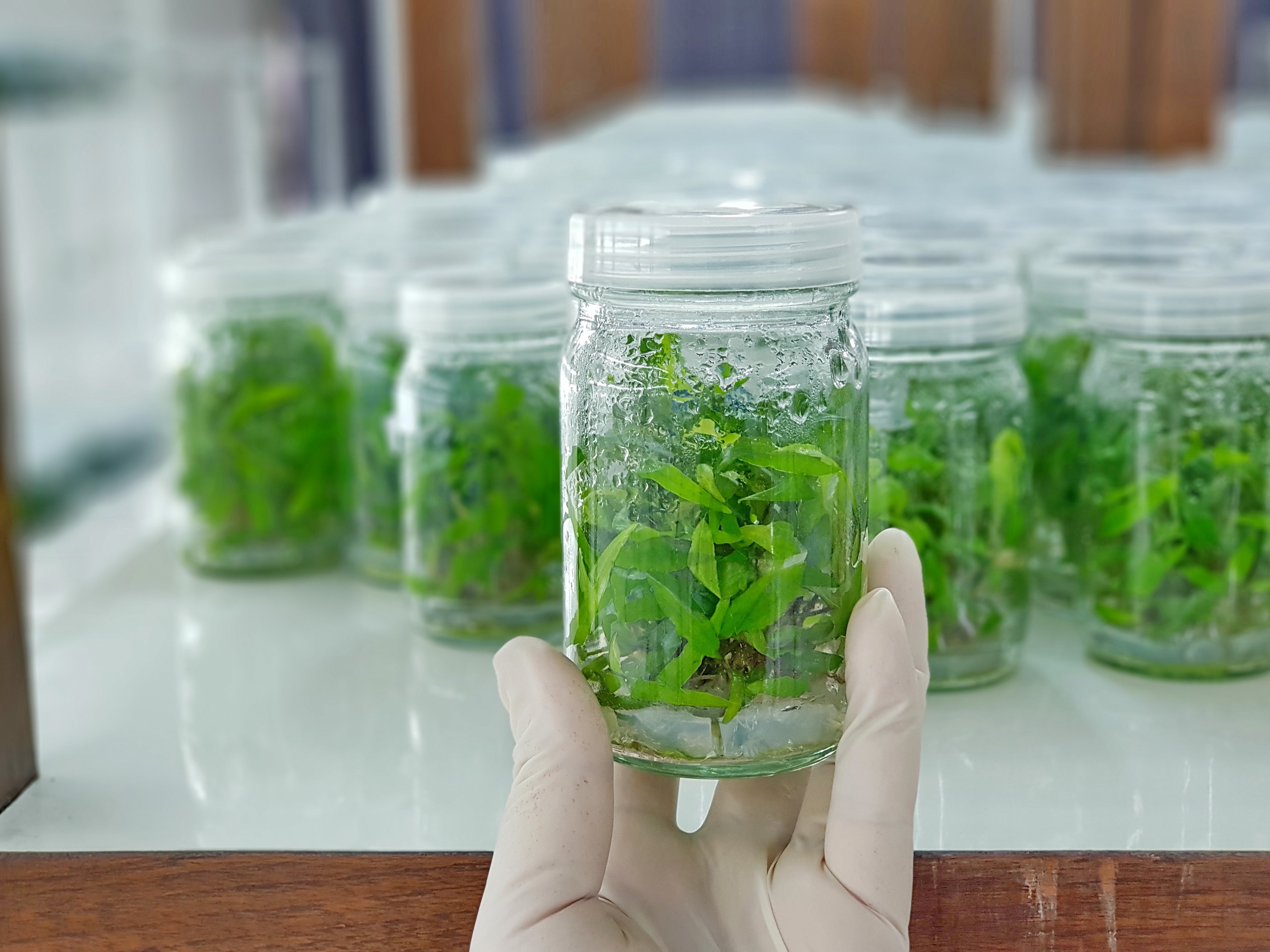
Provides facilities for laboratory experiments, practical training and research related to plant tissue culture and plant propagation. The centre offers students opportunities to gain experience in tissue culture techniques and related research activities.
Advancing knowledge in medicinal resources, natural products, pharmaceutical development and sustainable resource utilization.
Contact the Department of Indigenous Medical Resources for enquiries about undergraduate programmes, academic information and departmental activities.
Dr. W.P.R.T. Perera
Faculty of Indigenous Health Sciences and Technology
Advancing indigenous medicinal knowledge through scientific research, pharmaceutical innovation, conservation of medicinal resources and quality higher education.
Education goes beyond textbooks and classrooms. We believe in empowering students to explore their passions challenge conventions.
Preserving indigenous knowledge. Advancing medicinal science. Inspiring sustainable innovation through education, research and technology.
The Department of Indigenous Medical Resources is committed to the generation, advancement and dissemination of knowledge, skills and attitudes necessary for the effective, efficient and sustainable development, use and processing of indigenous medicinal resources.
The Department integrates traditional knowledge and practices with modern science and technology to promote innovation while preserving and advancing the rich heritage of indigenous medicine.
The Department offers two undergraduate degree programmes designed to address evolving national and global needs in indigenous medicinal resources and indigenous pharmaceutical technology. These programmes equip graduates with scientific knowledge, technical competencies, professional skills and innovative thinking.
Bringing indigenous medical knowledge together with scientific investigation, sustainable resource use and modern technological practice.
Guided by cultural values, academic excellence, innovation and the responsible use of indigenous resources.
To become the excellent department in generation and dissemination of knowledge, skills and attitudes so as to develop and utilize indigenous resources effectively and efficiently by recognizing the needs and values of cultures.
To maintain highest standards in education and innovation to develop indigenous medical resources by producing competent professionals while appreciating the social, cultural and economic values.
Welcome to the Department of Indigenous Medical Resources (IMR), a dynamic academic and research hub within the Faculty of Indigenous Health Sciences and Technology at the Gampaha Wickramarachchi University of Indigenous Medicine. Our department stands at the forefront of a transformative mission: to harmoniously blend traditional knowledge with modern science and technology for the sustainable development of medicinal resources and indigenous pharmaceutical innovations.
Sri Lanka possesses a rich heritage of indigenous medical knowledge, deeply rooted in cultural practices and biodiversity. At IMR, we recognize the immense value of this heritage and strive to scientifically validate, preserve, and advance it to meet contemporary healthcare and industrial demands. Our vision is not only to safeguard traditional wisdom but also to elevate it through cutting-edge research, innovation, and technological integration.
The department offers two flagship undergraduate programmes: the Bachelor of Science Honours in Indigenous Medicinal Resources and the Bachelor of Health Science Honours in Indigenous Pharmaceutical Technology. These programmes are designed to produce competent graduates equipped with multidisciplinary knowledge, practical skills, and entrepreneurial capabilities. Our graduates are prepared to contribute to national development, global health, and sustainable resource utilization.
A key strength of the department is its facilities, including chemistry and biology laboratories, an instrumentation laboratory, a dedicated pharmaceutical workshop, a plant tissue culture research centre, and a well-established herbarium. These resources provide students with hands-on experience and exposure to modern analytical techniques while maintaining a strong foundation in traditional practices.
Innovation and entrepreneurship are central to our academic philosophy. The department promotes herbal product development, enabling students to translate theoretical knowledge into practical applications. From herbal teas and ointments to cosmeceuticals and nutraceuticals, students engage in product design, formulation, and commercialization.
Through industry collaborations, research partnerships, community engagement, and international exposure programmes, we seek to prepare students for real-world challenges. The Department of Indigenous Medical Resources remains dedicated to fostering scientists, innovators, and entrepreneurs who can bridge the gap between tradition and modernity.
We invite you to explore our programmes, engage with our research, and join us in shaping a sustainable and innovative future for indigenous medical resources.
Two four-year honours degrees combining scientific knowledge, indigenous medical traditions, practical experience and professional development.
BHSc Hons in IPT
This four-year honours degree integrates and applies science-based technology to advance indigenous pharmaceutical products and provide effective and efficient services to the indigenous pharmaceutical industry in response to growing healthcare needs.
The degree is organized across four academic years and semester-based course modules. Each semester lasts 15 weeks.
BSc Hons in IMR
This four-year honours degree addresses growing demand for natural curatives, remedies, medicines and natural foods. It develops knowledge and skills in natural food production technology, medicinal herb technology, and organic agrarian livestock development and management.
The degree is organized across four academic years and semester-based course modules. Each semester lasts 15 weeks.
Programme coordinators: dimr@gwu.ac.lk
Facilities that support practical training, scientific investigation, medicinal plant research and product development.
Practical training in plant biology, medicinal plants, microbiology, plant physiology, plant anatomy, morphology and biotechnology.
A maintained collection of a wide range of medicinal plants supporting learning and study of medicinal resources.
Chemical investigation and characterization of medicinal resources and natural products, including chemical analysis, plant extract preparation and phytochemical evaluation.
Analytical equipment including spectrophotometers, centrifuging machines, incubators, PCR, gel electrophoresis units and gel imaging systems to support research and sample analysis.
Agricultural tools relevant to medicinal plant propagation and cultivation, together with a poly tunnel.
Laboratory experiments, training and research opportunities in plant tissue culture.
Advancing knowledge in medicinal resources, natural products, pharmaceutical development and sustainable resource utilization.
Cultivation, propagation and preservation of medicinal plants
Extraction, processing and preservation of medicinal resources and phytochemistry
Formulation and quality evaluation of herbal and natural-product medicines
Food, nutraceuticals and natural health product development
Environmental health and biodiversity
Integration of modern techniques into indigenous medicine
Analytical chemistry and quality control of medicinal resources
Additional learning opportunities offered by the Department of Indigenous Medical Resources.
A diploma programme focused on advanced analytical and molecular biology instrumentation.
A certificate course in protected agriculture.
Contact the Department of Indigenous Medical Resources for enquiries about undergraduate programmes, academic information and departmental activities.
The Department of Indigenous Medical Resources is committed to the generation, advancement and dissemination of knowledge, skills and attitudes necessary for the effective, efficient, sustainable development and use, and processing of indigenous medicinal resources. The Department integrates traditional knowledge and practices with modern science and technology to promote innovation, while preserving and advancing the rich heritage of indigenous medicine. The Department offers two undergraduate degree programs, specifically designed to address the evolving national and global needs in the fields of indigenous medicinal resources and indigenous pharmaceutical technology. These programmes aim to equip graduates with the scientific knowledge, technical competencies professional skills and innovative thinking required to contribute effectively in alignment with local and global needs.
Business
2 Years
120
English
Lorem ipsum dolor sit amet, consectetur adipiscing elit, sed do eiusmod tempor incididunt ut labore et dolore magna aliqua. Ut enim ad minim veniam, quis nostrud exercitation ullamco laboris nisi ut aliquip ex ea co mmodo consequat. Duis aute irure dolor in reprehenderit in voluptate velit esse cillum dolore eu fugiat nulla pariatur Placerat orci nulla pellentesque dignissim enim sit venenatis urna. Orci porta non pulvinar neque laoreet suspendisse interdum consectetur libero. Ipsum suspendisse ultrices gravida dictum fusce. Consectetur libero id faucibus nisl et. Suspendisse in est ante in mauris cursus mattis.
A 24-month M.S. Statistics program usually follows a structure split across three or four academic terms (e.g., two semesters plus a summer term, or three quarters plus a summer term).
Our university curriculum is designed to deliver a balanced future-focused learning experience that empowers students with both academic knowledge and practical competencies Each program is structured to combine foundational coursework specialized major subjects hands-on learning and interdisciplinary opportunities By integrating theory research and real-world applications we prepare students to excel in a rapidly evolving global environment Students begin with core courses that build essential skills in communication, critical thinking, digital literacy, and quantitative analysis.
Our curriculum is structured to provide a well-rounded, progressive learning journey that supports both academic excellence and practical skill development. It is organized into four key components: Core Courses, Major Requirements, Electives, and Experiential Learning.
| Regular Students | Required Credits |
|---|---|
| Core Courses | 30 Credits |
| Science (S) Core | 30 Credits |
| Business (B) Core | 3 Credits |
| GPA | 3 Credits |
| Total | 90 Credits |
The Science (S) Core develops a strong foundation in scientific principles, analytical thinking, and evidence-based problem-solving These courses introduce students to the fundamental concepts of the natural world while strengthening their abilities to observe, experiment.
| Semester 1 | Courses Code | Core Courses | Credits |
|---|---|---|---|
| Foundations in Communication & Critical Thinking (12 Required Credits) | IBS301 | International Business Management | 3 Credits |
| BUS109 | Introduction to Microeconomics | 3 Credits | |
| MKT200B | Principles of Marketing | 3 Credits | |
| BUS308B | Strategic Management | 3 Credits | |
| Accounting | BUS325B | Introduction to Operations Management & Decision Science | 3 Credits |
| FIN305 | Introduction to Corporate Finance | 3 Credits | |
| BUS110 | Introduction to Macroeconomics | 3 Credits | |
| ACC101 | Introduction to Accounting | 3 Credits | |
| Management | BUS100A | Introduction to Business | 3 Credits |
| BUS211C | People and Organization | 3 Credits |
The Science (S) Core develops a strong foundation in scientific principles, analytical thinking, and evidence-based problem-solving These courses introduce students to the fundamental concepts of the natural world while strengthening their abilities to observe, experiment.
| Semester 2 | Courses Code | Science | Credits |
|---|---|---|---|
| Science | PHY 101 | Conceptual Physics | 3 Credits |
| BIO 105 | Introduction to Life Sciences | 3 Credits | |
| PHY 101 | Introduction to Physical Science | 3 Credits | |
| ENV 110 | Environmental Science | 3 Credits | |
| Technology | CS 101 | Digital Foundations and Applied Programming | 3 Credits |
| TECH 205 | Management Information Systems (MIS) | 3 Credits | |
| ENGR 100 | Introduction to Engineering Principles | 3 Credits | |
| DATA 210 | Data Management and Visualization | 3 Credits | |
| Mathematics | MATH 115 | College Algebra and Trigonometry | 3 Credits |
| STAT 201 | Probability and Statistics | 3 Credits |
The Business Core, requiring 30 credits (typically eleven 3-credit courses), is the largest component of the foundational curriculum. It ensures students gain a comprehensive, interdisciplinary understanding of the functional areas necessary to operate and manage an organization.
| Semester 3 | Courses Code | Business Core | Credits |
|---|---|---|---|
| Finance | IBS301 | International Business Management | 3 Credits |
| BUS109 | Introduction to Microeconomics | 3 Credits | |
| MKT200B | Principles of Marketing | 3 Credits | |
| BUS308B | Strategic Management | 3 Credits | |
| Accounting | BUS325B | Introduction to Operations Management & Decision Science | 3 Credits |
| FIN305 | Introduction to Corporate Finance | 3 Credits | |
| BUS110 | Introduction to Macroeconomics | 3 Credits | |
| ACC101 | Introduction to Accounting | 3 Credits | |
| Management | BUS100A | Introduction to Business | 3 Credits |
| BUS211C | People and Organization | 3 Credits |
Our program costs are designed to remain transparent competitive and accessible for students from diverse backgrounds. Each academic program includes tuition fees, registration charges and essential learning resources ensuring students receive high-quality education and comprehensive academic support Costs may vary based on program type, course load, and mode of study (on-campus, hybrid, or online) We aim to provide exceptional value through modern facilities, expert faculty, and industry aligned curriculum making your investment in education both meaningful and future-focused.
| Spring 2025 | Summer 2025 | Fall 2025 | Winter 2025 | Annual | |
|---|---|---|---|---|---|
| 17 weeks | 6 weeks Summer 1 3 Weeks Summer 2 3 Weeks | 16 weeks | 17 weeks Winter 1 3 Weeks Winter 2 3 Weeks | Costs USD | |
| Enrollment Fee (Onetime fee) | $560 | $560* | $660 | ||
| Orientations Fee (Onetime fee) | $159 | $159* | $159 | ||
| Medical Insurance (Yearly) | $68 | $68 | |||
| Tuition | $4,129 | $1,139 | $5,138 | $1,028 | $11,434 |
| Residence | $728 | $364 | $728 | $364 | $2,184 |
| Breakfast Fee | $448 | Not offered | $448 | Not offered | $896 |
| Activity Fee | $100 | $100 | $200 | ||
| Total Fast Year | $6,192 | $1,503 | $7,133 | $1,392 | $16,220 |
| Total Second Year | $5,192 | $1,503 | $7,133 | $1,392 | $15,220 |
Our program costs are designed to remain transparent competitive and accessible for students from diverse backgrounds. Each academic program includes tuition fees, registration charges and essential learning resources ensuring students receive high-quality education and comprehensive academic support Costs may vary based on program type, course load, and mode of study (on-campus, hybrid, or online) We aim to provide exceptional value through modern facilities, expert faculty, and industry aligned curriculum making your investment in education both meaningful and future-focused.
| Program Level | Adnations Session | Applications Opens | Appellation Deadline | Classes Begin |
|---|---|---|---|---|
| Undergraduate | Spring Intake | October 1 | December 15 | January 10 |
| Undergraduate | Fall Intake | April 1 | July 30 | September 1 |
| Postgraduate | Spring Intake | October 1 | December 30 | January 15 |
| Postgraduate | Fall Intake | April1 | August 10 | September 5 |
| International Students | All Intake | 6 Month Before | 2 Months Before | As Scheduled |
Our program costs are designed to remain transparent competitive and accessible for students from diverse backgrounds. Each academic program includes tuition fees, registration charges and essential learning resources ensuring students receive high-quality education and comprehensive academic.
Advancing indigenous medicinal knowledge through scientific research, pharmaceutical innovation, conservation of medicinal resources and quality higher education.
Connecting indigenous medicinal knowledge with modern scientific education and research.
The Department of Indigenous Medical Resources focuses on education, research and development related to indigenous medicinal resources and their applications. The department promotes the scientific study of medicinal plants, pharmaceutical technology, natural products and analytical techniques.
Through theoretical instruction, laboratory practicals, field-based learning and research activities, students develop knowledge and practical skills relevant to medicinal resource identification, conservation, processing, quality assessment and scientific investigation.
The department encourages the integration of traditional knowledge with appropriate scientific methods to support the sustainable use and development of indigenous medicinal resources.
Our educational and research direction is guided by a commitment to indigenous medicinal knowledge and scientific advancement.
To be a centre of excellence in indigenous medicinal resources, pharmaceutical technology and scientific research, contributing to the advancement and sustainable development of indigenous medicine.
To provide quality education and promote research, innovation and sustainable practices in indigenous medicinal resources through the integration of traditional knowledge, scientific methods and practical training.
Head of the Department
Department of Indigenous Medical Resources
The Department of Indigenous Medical Resources is committed to advancing knowledge and understanding of indigenous medicinal resources through education, research and practical training.
Our programmes aim to equip students with the scientific knowledge, technical skills and research capabilities needed to contribute to the study, development and sustainable use of medicinal resources.
We encourage our students to approach learning with curiosity, responsibility and a commitment to innovation, while respecting the value of indigenous knowledge and supporting its continued development through scientific investigation.
We welcome prospective students, researchers and collaborators to explore the academic and research opportunities offered by our department.
Explore undergraduate study pathways related to indigenous pharmaceutical technology and medicinal resources.
BHSc Hons in IPT
This programme focuses on indigenous pharmaceutical technology, medicinal materials, processing methods, pharmaceutical preparation, quality practices and scientific approaches to indigenous medicine.
Admission is subject to the applicable university admission requirements and approved entry criteria. Please refer to the official prospectus for current requirements.
Refer to the official curriculum for exact course units and credit allocations.
Add the official curriculum or student handbook link here when it is available.
BSc Hons in IMR
This programme focuses on indigenous medicinal resources, medicinal plant science, resource identification, conservation, cultivation, laboratory investigation and natural product research.
Admission is subject to the applicable university admission requirements and approved entry criteria. Please refer to the official prospectus for current requirements.
Refer to the official curriculum for exact course units and credit allocations.
Add the official curriculum or student handbook link here when it is available.
Facilities supporting practical education, laboratory training, medicinal resource studies and scientific research.
Supports biological studies and practical learning relevant to plants, biological materials and medicinal resource investigations.
Supports the study, documentation, identification and preservation of plant specimens for education and research.
Supports chemistry practicals, sample preparation, laboratory investigations and analytical learning.
Supports practical training and research using available laboratory instruments and scientific techniques.
Supports medicinal plant cultivation and learning related to agricultural tools, protected cultivation and poly-tunnel practices.
Supports research and practical learning related to plant tissue culture and relevant plant propagation techniques.
Research themes related to indigenous medicinal resources, laboratory science, pharmaceutical technology and sustainable resource development.
Additional training opportunities in laboratory instrumentation, analytical techniques and protected agriculture.
Specialised training focused on advanced analytical and molecular biology instrumentation, laboratory methods and relevant practical applications.
Training related to protected cultivation practices and agricultural methods relevant to controlled growing environments.
For enquiries about the Department of Indigenous Medical Resources, undergraduate programmes, research or academic activities, please contact the department.
Advancing indigenous medicinal knowledge through scientific research, pharmaceutical innovation, conservation of medicinal resources and quality higher education.
Knowledge • Nature • Innovation